
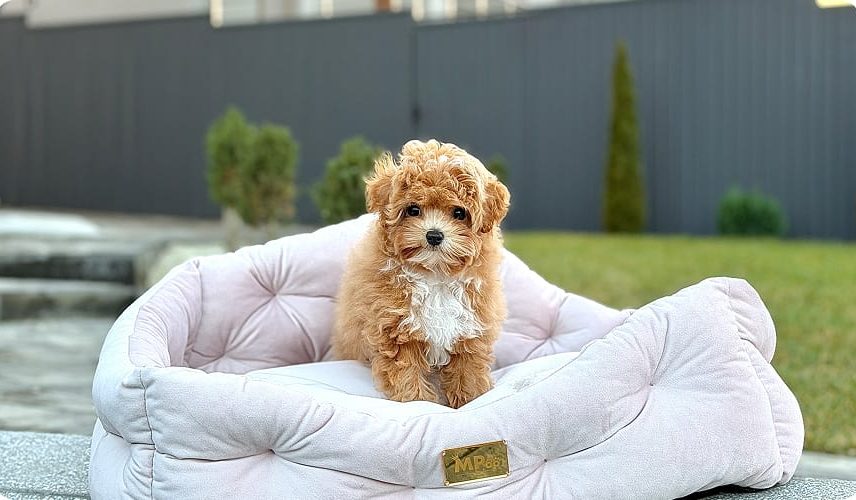
Maltipoo and Hot Weather: Summer Care, Paw Protection, and Rules for Walks in Hot Weather
Maltipoos thrive in the warmth of a home, but summer heat is a completely different story. A small body overheats faster than a large breed’s, paws get burned on scorching asphalt, and the coat that protects against winter cold can become an additional source of discomfort in summer. On top of that, maltipoos rarely show signs of distress until things become genuinely serious. That is why knowing the rules of summer care matters before problems appear, not after. This article covers everything you need to know about summer walks, paw protection, recognising overheating and managing your dog’s routine in hot weather. If you are still choosing a puppy, browse our puppy catalogue — there you will find videos in motion and short personality descriptions for every puppy.
Why maltipoos struggle in the heat
Unlike humans, dogs do not sweat through their skin. Their primary cooling mechanism is rapid open-mouthed breathing, known as panting. This process requires a large amount of moisture and is considerably less efficient than human perspiration. Maltipoos have several additional factors that make them particularly vulnerable. First, a small body mass means that internal temperature rises faster under the same external conditions. Second, a dense silky coat, even when not especially long, still retains heat. Third, maltipoos are strongly oriented towards their owner and often continue to move and play even when already overheated, simply because they do not want to fall behind. This combination makes them susceptible to overheating even in moderately warm weather.
Signs of overheating: what to notice before it is too late
Heatstroke in a maltipoo can be prevented if you catch the early warning signs in time. The first indicators that a dog is getting too hot include rapid and laboured breathing, a bright red or pale tongue, excessive drooling, an unsteady gait or sudden lethargy during a walk. If you notice these symptoms, stop immediately, move to shade and offer water in small sips. More serious signs of overheating — vomiting, diarrhoea, loss of consciousness, seizures or very dark urine — require emergency veterinary attention. Do not wait to see if things get obviously worse. Heatstroke in small breeds develops very quickly and can become life-threatening within minutes.
Rules for walking in hot weather
Time of day is the most important factor
In summer the safest times for walks are early morning before 9 or 10 a.m. and in the evening after 7 or 8 p.m., when both the pavement and the air have had a chance to cool down. Between 11 a.m. and 6 p.m. it is not recommended to take a maltipoo outside even on a cloudy day — cloud cover does not protect against hot surfaces, and asphalt during those hours can be 20 to 30 degrees hotter than the air above it. If your schedule does not allow you to avoid daytime walks entirely, keep them as short as possible and choose shaded routes — parks, tree-lined paths and green courtyards.
Walk duration
Summer walks should be shorter than in cooler months. Even if the maltipoo seems energetic and eager to continue, base your decisions on the temperature rather than the dog’s apparent enthusiasm. When the temperature exceeds 25 degrees Celsius, limit walks to 15 to 20 minutes and always bring water. Above 30 degrees, go outside only when absolutely necessary and for the shortest time possible. Remember: a maltipoo will not tell you it is struggling — it will simply keep walking alongside you. The responsibility for managing the walk’s duration rests entirely with you.
Choosing your route
Avoid asphalt and open areas without shade. The ideal summer route runs over grass or soil in a shaded spot. If there is a park with a pond or fountain nearby, that is an excellent option: you can wet the paws and belly to help the dog cool down. Avoid sandy beaches during daylight hours — sand heats up even more intensely than asphalt and can cause serious burns to the paws.
Paw protection: a simple test and practical solutions
A maltipoo’s paws are highly sensitive to hot surfaces. The paw pads are structured much like the skin on our palms and can suffer burns just as easily from contact with scorching asphalt. A simple test that prevents mistakes: press your palm flat against the asphalt and hold it there for 5 to 7 seconds. If it is uncomfortable or painful for you, the surface is also dangerous for your maltipoo. If you are planning a walk on asphalt during the warmer part of the day, there are several ways to protect the paws. Dog boots help, but not all maltipoos accept them straight away — introduce them gradually at home before heading outside. Protective paw wax is a convenient alternative to footwear: apply it to the pads before going out and it creates a protective barrier. After every walk, rinse the paws with cool water and check the pads for redness, cracks or swelling.
Hydration in summer
In summer a maltipoo needs significantly more water than in cooler months. A bowl of water should be accessible at all times and filled with fresh water — in hot weather the water in a bowl warms up quickly and becomes less appealing to the dog. Change it several times a day and make sure the bowl is kept in the shade. On walks, bring a collapsible travel bowl and a bottle of water and offer a drink every 10 to 15 minutes, even if the dog does not ask. If your maltipoo is reluctant to drink at home, try a water fountain: many dogs are more willing to drink from running water. Signs of dehydration include a dry tongue, dark urine, lethargy and sunken eyes. If these symptoms appear, offer water and contact a vet if the condition does not improve. For more detail on hydration norms and drinking habits at different ages, see the article Maltipoo Care Details: A Practical Guide for New Owners.
Summer grooming: should you clip shorter?
A common summer question is whether to clip a maltipoo shorter to keep it cooler. The answer is not straightforward. On one hand, a shorter coat does make thermoregulation easier and simplifies summer upkeep. On the other hand, the coat also serves a protective function: it shields the skin from direct sunlight and helps prevent sunburn. If you do decide to clip shorter in summer, do not remove the coat entirely — leave at least 2 to 3 centimetres to protect the skin. It is also worth increasing the frequency of grooming sessions in summer: the coat gets dirty faster, and a warm and humid environment encourages fungal skin infections if the coat is not regularly brushed out and properly dried after bathing. Regular summer grooming is not just about appearance — it is about hygiene and skin health.
Keeping comfortable indoors in the heat
Indoor temperature
The ideal indoor temperature for a maltipoo in summer is between 20 and 24 degrees Celsius. If you have air conditioning, do not direct the flow of cold air straight at the dog and do not cool the room below 19 to 20 degrees — the difference between outdoors and indoors should not exceed 7 to 8 degrees, otherwise the contrast puts stress on the body and raises the risk of respiratory illness. If there is no air conditioning, damp towels on the floor, cooling mats for dogs and a fan directed at the wall or ceiling rather than at the dog all help.
Resting place
In summer a maltipoo will naturally seek out cooler spots — floor tiles, the area near a window or the hallway. Do not discourage this. If your dog has chosen the floor over its bed, it is simply more comfortable there. You can place a cooling mat or a damp towel on the floor as a safe and simple alternative. Make sure the resting spot is in the shade and away from direct sunlight coming through a window — glass intensifies the effect of solar heat and can turn even a cool room into a trap on a sunny day.
Cars in summer
Never leave a maltipoo in a parked car in summer — not even for a few minutes, not even in the shade, not even with the windows open. The temperature inside a car in direct sunlight can reach 50 to 60 degrees Celsius within 10 to 15 minutes. For a small maltipoo this is a life-threatening situation. If you are travelling with your dog in summer, read the detailed advice on safe car journeys in the article Traveling with a Maltipoo: Car and Plane Trips Without Stress.
Feeding in hot weather
In summer a maltipoo’s appetite may decrease — this is normal and related to the natural reduction in activity during heat. Do not force the dog to eat if it refuses food during the hottest part of the day. It is better to shift feeding times to the morning and evening, when temperatures are lower and appetite is better. Do not leave wet food in the bowl for more than 20 to 30 minutes in hot weather — it spoils quickly. Dry food keeps longer but should also be removed after feeding. Keep the food bowl, like the water bowl, in the shade and wash it daily, as bacteria multiply much faster in warm conditions.
First aid for overheating
If you notice signs of overheating, act quickly and calmly. Move the dog immediately to a cool place — a room with air conditioning, a shaded area or a cool entrance hall. Wet the coat with cool (not ice cold) water, particularly around the neck, armpits and groin where major blood vessels run close to the surface. Offer water in small amounts. Do not use ice or very cold water: a sudden temperature drop can cause vascular spasm and worsen the condition. Place a damp towel over the body and let the dog rest quietly. If the condition does not improve within 10 to 15 minutes, or if there are any alarming symptoms — vomiting, seizures, loss of consciousness — take the dog to a vet immediately. Heatstroke is a medical emergency and requires professional treatment.
How we at MilaPoo Family prepare puppies for different conditions
From the very first weeks we introduce puppies to a variety of environmental conditions at a safe and gentle pace. Puppies gradually become familiar with different surfaces underfoot, different sounds and temperature changes. This builds resilience and confidence in new situations — including hot summer conditions. For more on how this process unfolds from the earliest weeks, see the article Maltipoo Puppy Socialization: A Complete Guide from the First Weeks. If you have questions about summer care or would like personalised recommendations, get in touch. All our contact details are on the Contacts page.
Frequently asked questions
Can I bathe my maltipoo more often in summer?
Yes, in summer you can increase bathing frequency to once every 5 to 7 days if the dog is going on active walks and getting dirty. The key is to dry the coat thoroughly after every bath, especially in skin folds and around the ears, to prevent fungal infections from developing. Never leave a maltipoo with a damp coat in a draught or under an air conditioning unit.
Does a maltipoo need sunscreen?
For areas with thin or no fur — the nose, ears and belly — yes, a dog-specific sunscreen can be useful during prolonged sun exposure. Never use human sunscreen: most formulations contain oxybenzone and zinc, both of which are toxic to dogs.
My maltipoo refuses to drink in summer. What should I do?
Try a few different approaches: chill the water in the fridge to a pleasantly cool temperature, add a water fountain, offer ice cubes as a treat, or freeze small pieces of fruit in water. If the dog has not drunk anything for several hours and also appears lethargic, consult a vet.
Are beach trips dangerous for a maltipoo?
The beach during daylight hours in summer is one of the most challenging environments for a maltipoo. Scorching sand, no shade, intense thirst and high humidity all create conditions for rapid overheating. If you want to take your dog to the sea, do so early in the morning or in the evening, bring an umbrella, plenty of water and do not stay too long. After walking on sand and through sea water, rinse the paws and coat thoroughly with fresh water — salt irritates the skin and can cause itching.
Daily tips and live photos of our puppies are on Instagram. Behind-the-scenes moments and new puppy announcements are in our Telegram channel.